Lutein And Zeaxanthin: What The Research Actually Shows
Lutein and Zeaxanthin are the two most extensively studied carotenoids in eye-wellness supplementation, with a genuinely solid research base tied to a landmark NIH-sponsored trial.
Understanding what that research actually found, and what it doesn't, helps evaluate any formula that includes them.
The AREDS2 connection
Lutein and Zeaxanthin were specifically studied in the Age-Related Eye Disease Study 2 (AREDS2), a large NIH-sponsored trial. In participants who already had intermediate or advanced macular degeneration, the AREDS2 nutrient combination was associated with a reduced risk of disease progression. Details are documented by the National Eye Institute.
How they are thought to work
Lutein and Zeaxanthin accumulate directly in the macula, forming a yellow pigment layer that may help filter some high-energy light and provide antioxidant protection to underlying retinal tissue.
What this does not mean for every formula
What the evidence does not support
Lutein and Zeaxanthin do not reverse existing vision loss, do not cure glaucoma or cataracts, and their research base concerns general macular health rather than the many other structures involved in vision, like the optic nerve or brain visual processing.
Applying this to EyeFortin
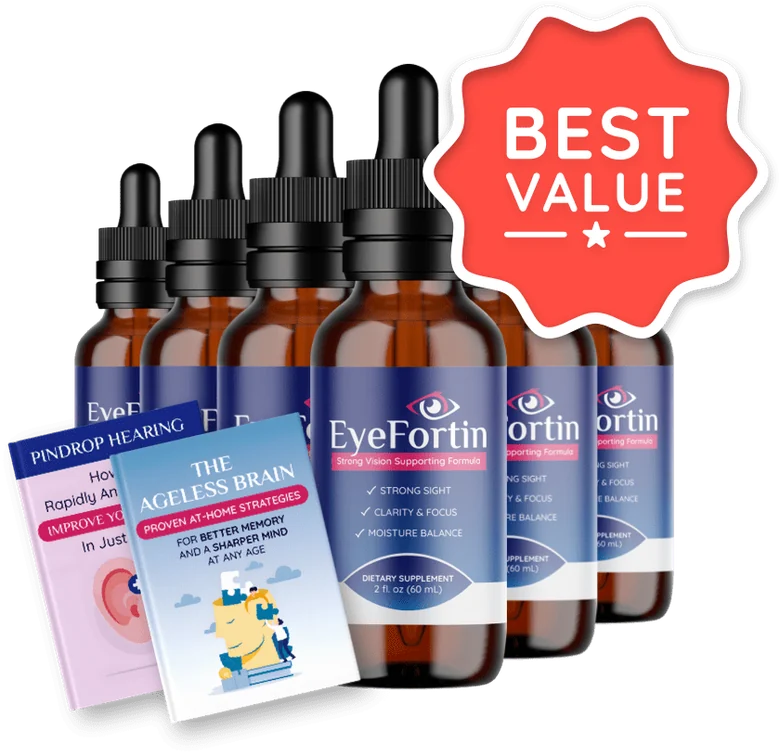
EyeFortin is believed to include both Lutein and Zeaxanthin based on public label information. See our full breakdown on EyeFortin's ingredients. Because some of the label uses a blend structure, we cannot confirm whether the amounts included match AREDS2-studied levels — a limitation worth knowing before you buy.